1
1814
Imperial chapel on rue de Berri
After the Napoleonic wars, Tsar Alexander I stayed in Paris. His campaign chapel, installed in rented premises near the Champs-Élysées, is remembered as the precursor of the cathedral.
A beacon of Russian Orthodoxy in the heart of Paris since 1861
12, rue Daru — 75008 Paris, France
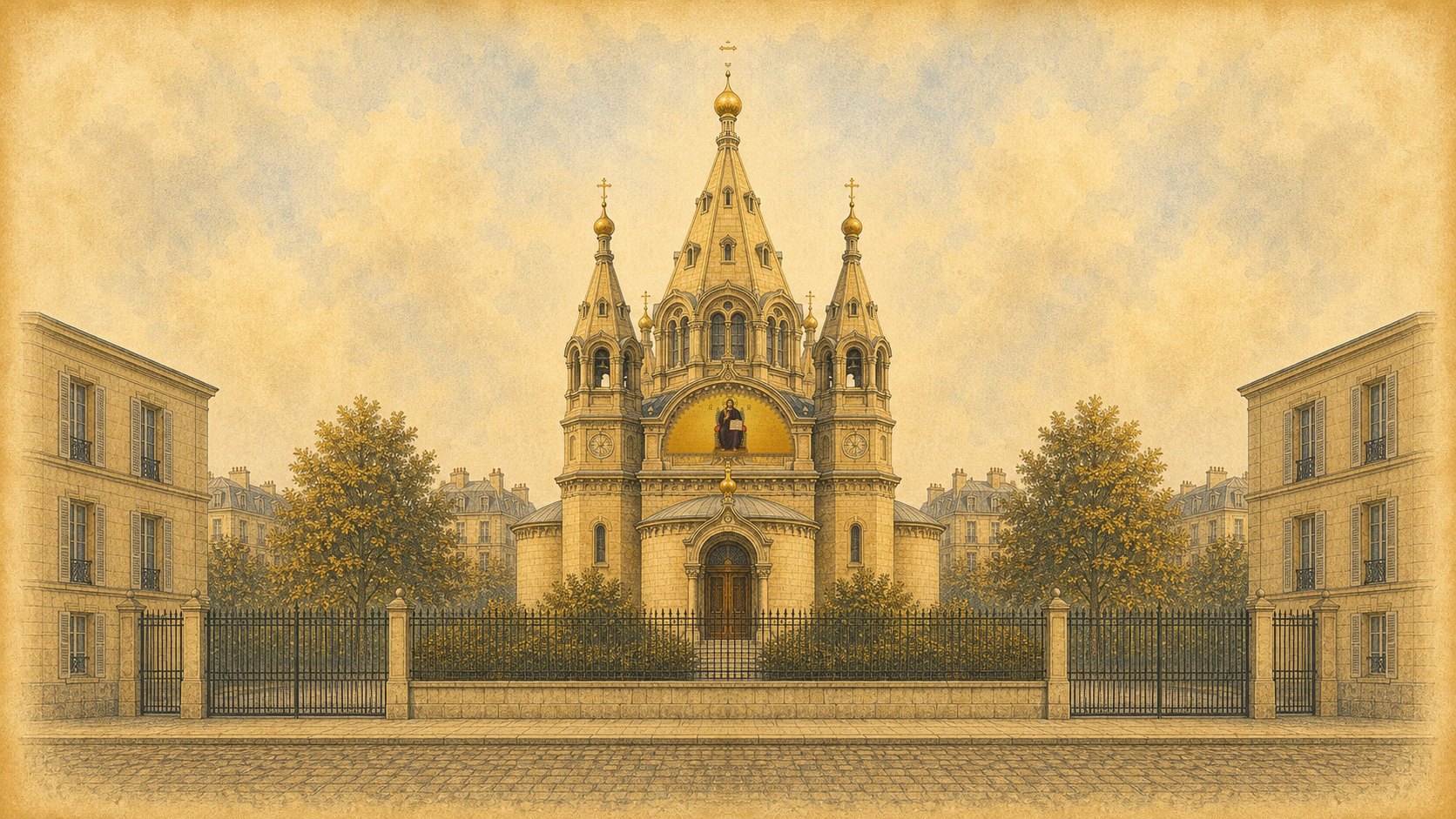
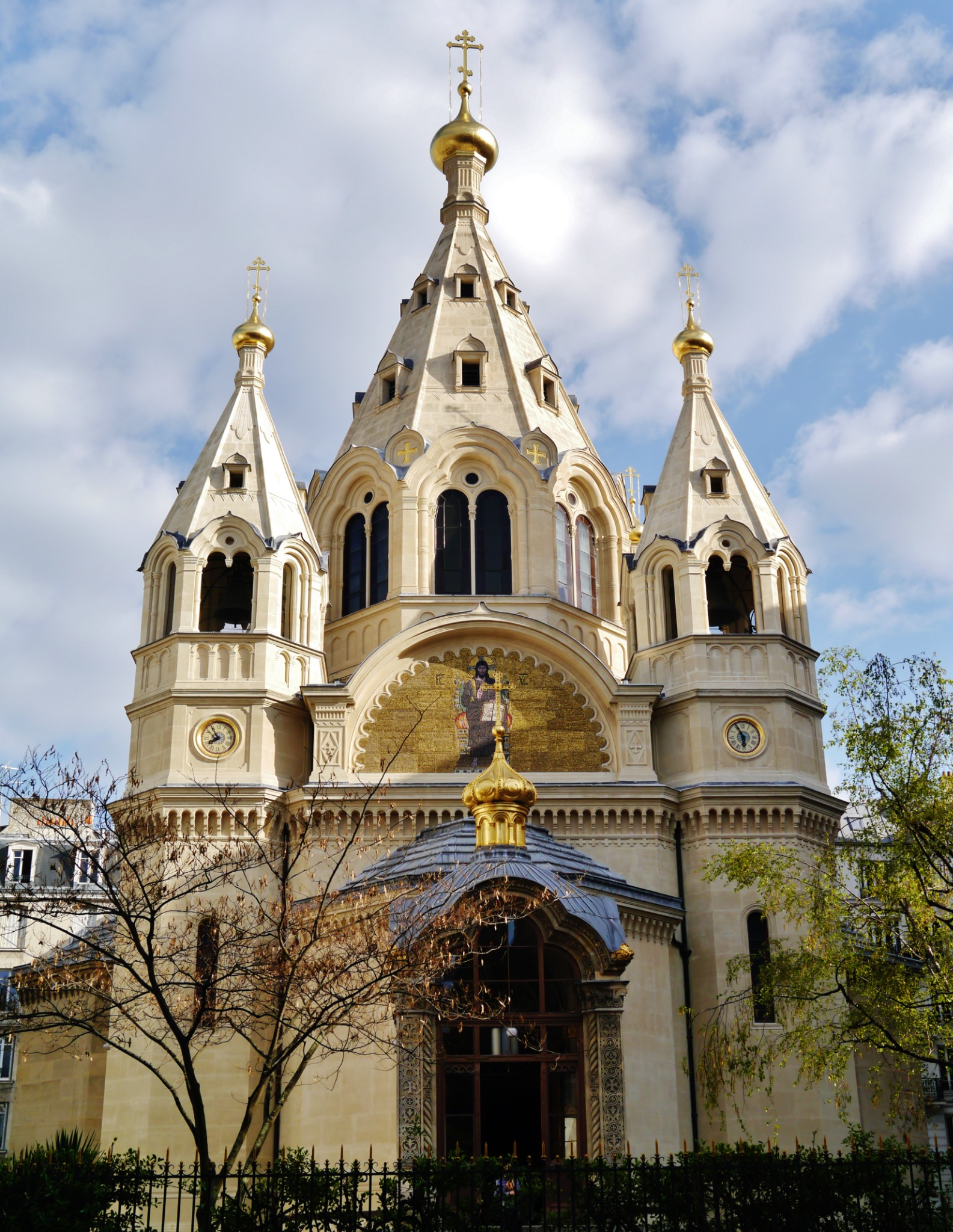
The Cathedral of St. Alexander Nevsky is the first Russian Orthodox place of worship in France. Consecrated in 1861, it remains a remarkable example of Byzantine-Muscovite architecture in the heart of Paris’s 8th arrondissement.
Within the Archdiocese of Orthodox Churches of Russian Tradition in Western Europe, the cathedral is a spiritual home for the faithful and a place of encounter for all who seek the beauty of Orthodox worship.
Services are celebrated primarily in Church Slavonic according to the Julian calendar. The crypt houses the Parish of the Holy Trinity, where services are celebrated in French.
Join our services from anywhere in the world
We broadcast our divine services live so that those who cannot be physically present may still participate in prayer. Subscribe to our YouTube channel to receive notifications before each broadcast.
Open YouTube ChannelRegular weekly services and current parish calendar
The life of our cathedral community

With the blessing of Metropolitan Jean of Doubna, the annual workshop of liturgical practice and chant returns to the cathedral.
Liturgical musicRead more
His Eminence Metropolitan Jean of Doubna addresses the faithful with his Paschal message: “Christ is Risen!” — the joyful greeting of the feast of Pascha.
Archpastoral messageRead more
A lecture on the dialogue of epochs in Christian painting, from ancient Russian icon painters to the avant-garde artists of the twentieth century.
ConferenceRead more
Weekly Bible study meetings continue every Wednesday at 19:00 in the parish hall. Current study: the Book of Genesis.
Bible studyRead moreA day of encounter for Orthodox youth from different movements, on the eve of the Sunday of Orthodoxy.
YouthRead more“Do not fear, only believe” — the 18th Orthodox Congress gathers faithful from across Western Europe around the theme of hope in a world in crisis.
CongressRead moreA Russian Orthodox presence in Paris from the imperial chapel to the present cathedral
After the Napoleonic wars, Tsar Alexander I stayed in Paris. His campaign chapel, installed in rented premises near the Champs-Élysées, is remembered as the precursor of the cathedral.
Father Joseph Vassiliev, chaplain of the Imperial Russian Embassy in France, demonstrated the need for a permanent Orthodox church in Paris.
The project moved forward after official authorization and through a broad subscription: support came from Russia, from Russians living abroad, and from Orthodox faithful and friends of the community in France.
The first stone was laid on 3 March 1859. Roman Kouzmine drew the plans, Ivan Strohm directed the Paris works, and the church was consecrated to Saint Alexander Nevsky on 11 September 1861.
On 7 June 1867, after Alexander II escaped an attempted attack at the Bois de Boulogne, he and Empress Maria attended a Te Deum in the cathedral; the tsar offered two icons to the church. In 1896, Emperor Nicholas II and Empress Alexandra began their official visit to Paris with a Te Deum here.
After the Revolution, the Russian population scattered outside Russia was estimated at two to three million. The Archdiocese traces its legal continuity to the Russian church administration entrusted to Archbishop Eulogius in 1921. In 1922, when he established the diocesan center in Paris, Saint Alexander Nevsky became the cathedral church.
After water infiltrations, the crypt was restored and repainted with frescoes by Albert-Alexandrovitch Benois, in collaboration with Marguerite Benois, evoking the Christianization of Rus’.
The Ministry of Culture notice records the site inscription of 6 August 1975, an early layer of public heritage protection around the cathedral.
The cathedral, including the crypt, was classified as a French historic monument by the order of 11 May 1981.
The canonical attachment of the Archdiocese to the Moscow Patriarchate became effective on 3 November 2019 through the Patriarchal and Synodal Charter.
Inspired by Hagia Sophia, adorned by master iconographers
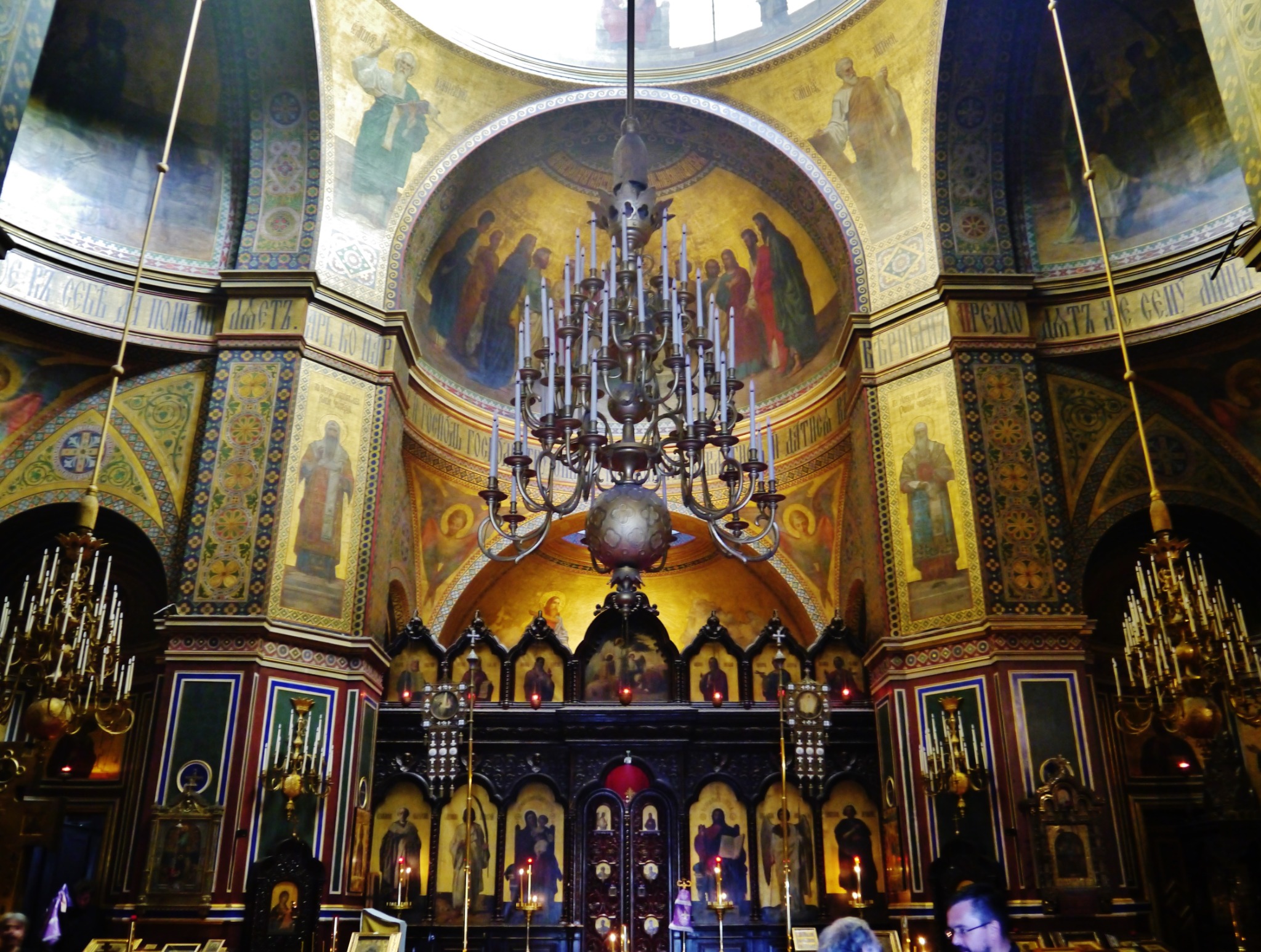
The magnificent iconostasis separates the Holy of Holies from the nave, presenting icons in their theological hierarchy. The lower Royal Portal features the Annunciation and the Four Evangelists by Evgraf Sorokin.
The upper level displays the Holy Trinity by Pavel Sorokin, flanked by Old Testament figures. The walls are adorned with murals by D. Sorokin and Fyodor Bronnikov depicting the Nativity, the Sermon on the Mount, the Entry into Jerusalem, and the Last Supper.
Two remarkable murals by Alexei Bogoliubov — "Christ Walking on the Waters" and "Christ Preaching at the Lake of Tiberias" — complete this sacred space of extraordinary beauty.
The liturgical choir of the cathedral
This section is prepared for information about the cathedral choir, its liturgical role, repertoire, history, and photographs.
The choir is directed by Protodeacon Alexander Kedroff, the choirmaster. Verified biographical and musical details can be added here later.
Protodeacon Alexander Kedroff directs the choir. This space is reserved for his biography, musical service, recordings, and future photographs.
Until the final text is supplied, the section remains concise and easy to update from the maintenance console.
A living voice of prayer above rue Daru
This section is prepared for the history, description, and photographs of the cathedral bells.
Use it to present the bells, their liturgical role, notable ringing traditions, and any verified historical details.
A dedicated place is reserved here for the bell-ringer: biography, service, ringing responsibilities, and photographs can be added when ready.
Until the final text is supplied, this section remains intentionally simple and factual.

Saint Andrew Rublev Orthodox Iconography School
The Saint Andrew Rublev Orthodox Iconography School was founded in 2016 with the blessing of His Eminence Metropolitan Jean of Doubna, Archbishop of the Orthodox parishes of Russian tradition in Western Europe, Moscow Patriarchate.
To train professional iconographers capable of serving parishes and individual faithful.
To make the art of the icon more accessible and understandable to all who wish to deepen their knowledge of the Church Tradition and enrich their faith and spiritual life through iconography.
The school is an ecclesiastical educational association governed by the French law of 1 July 1901. Its teaching is founded on the Orthodox Church tradition and rests on three main elements: liturgical prayer, theory, and practice. Headquarters: 13 rue Guy Gotthelf, 91330 Yerres.

The Holy Trinity icon by Saint Andrei Rublev.
The Parish of the Holy Trinity
Beneath the cathedral is the crypt church of the Holy Trinity, a prayerful space with its own liturgical life.
The crypt became one of the first French-speaking Orthodox parishes, opening the riches of the Orthodox tradition to the local faithful.
Today it remains closely linked to the cathedral while serving those who worship in French.
Visit the crypt website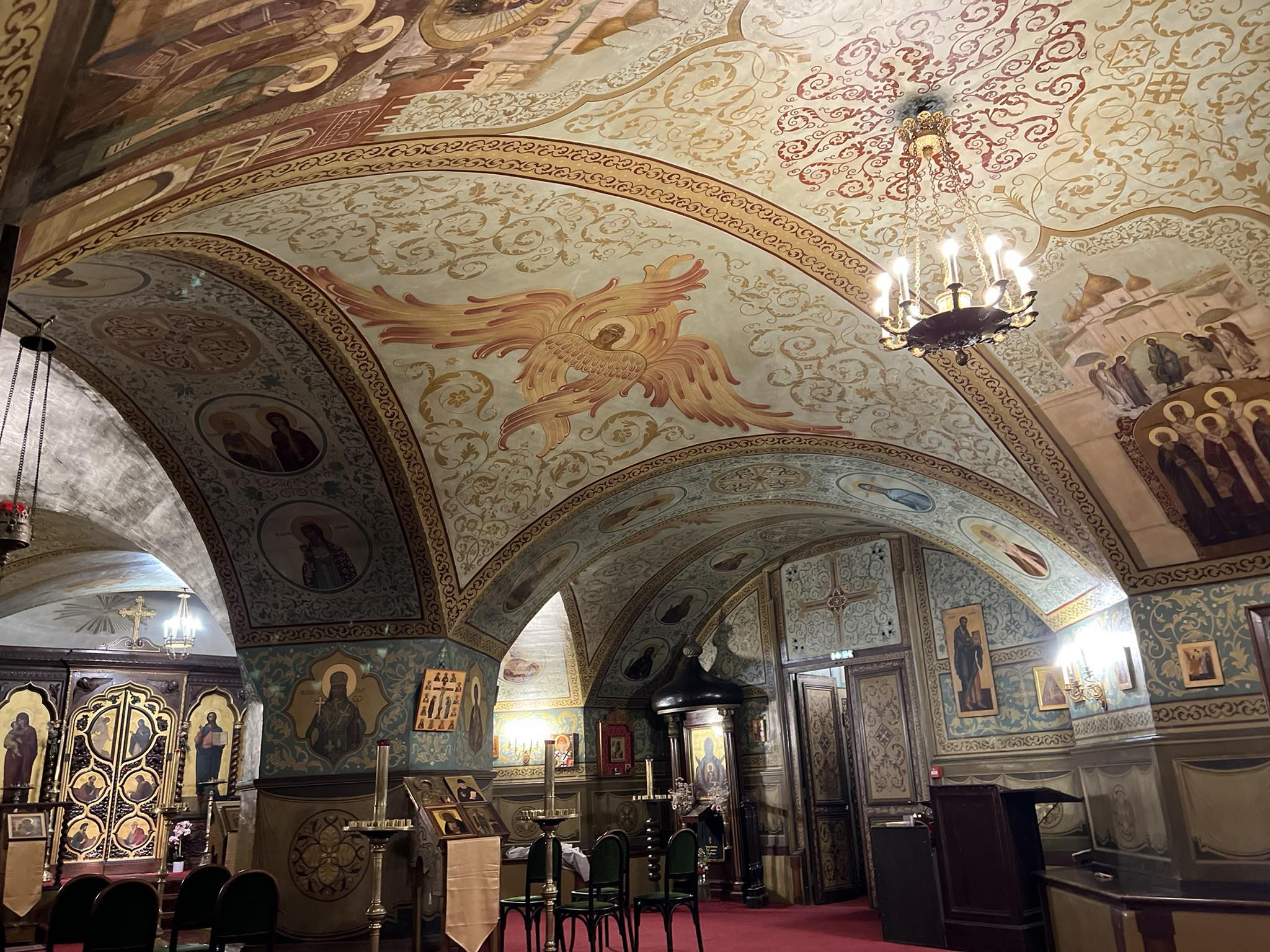
Those serving the liturgical and pastoral life of the cathedral
Archbishop of the Archdiocese
His Eminence presides over the Archdiocese of Orthodox Churches of Russian Tradition in Western Europe.
Dean (ключарь)
Serving the cathedral parish with dedication and pastoral solicitude.
Archpriest
Serving the cathedral parish with faith and pastoral zeal.
Protodeacon
He serves at the holy altar with reverence and zeal.
Choirmaster and cantor
He leads the cathedral choir in the traditions of Russian liturgical singing.
Cantor
She contributes to the beauty of divine worship through sacred singing.
Churchwarden
He oversees the material and administrative affairs of the cathedral.
Plan your visit to the cathedral
Address
12, rue Daru — 75008 Paris, France
Métro: Courcelles, Ternes, Charles de Gaulle-Étoile: Courcelles, Ternes, Charles de Gaulle-Étoile
Telephone
+33 (0)1 42 27 37 34
Cathedral contact email
cathedrale@saint-alexandre-nevsky.fr
Visits only
visites.cathedrale.daru@gmail.com
General contact uses the cathedral email. Visit-only questions can be sent to the visits email; the group visit request form below remains addressed to the cathedral.
For groups of 10 or more people. Choose an available time and send a request.
Visit availability last updated: 2026-05-02
Requests are reviewed manually. A visit is confirmed only after you receive a reply from the cathedral.
People and events linked to the cathedral
On July 12, 1918, Pablo Picasso married the Russian ballerina Olga Khokhlova here. The witnesses were Jean Cocteau, Max Jacob, and Guillaume Apollinaire.
The cathedral was associated with the final farewells to Ivan Turgenev, Feodor Chaliapin, Wassily Kandinsky, George Gurdjieff, Ivan Bunin, Andrei Tarkovsky, and Henri Troyat.
Members of the Russian imperial family and the Russian émigré community were closely linked to the cathedral, which long served as a spiritual home for the diaspora.
The 1956 film "Anastasia" opens with a scene at the cathedral. Alexander Schmemann, future dean of St. Vladimir's Seminary, served here as an altar boy in the 1930s.
The cathedral, its interior, and sacred architectural details